
ASR Swimming Pools in Austin Texas: Understanding “Concrete Cancer” in Pool Shells
Over the past several years we’ve been getting more calls from homeowners around Austin, Lakeway, Bee Cave, and Westlake about unusual cracking in their swimming pools. In many of these cases the issue turns out to be something called Alkali-Silica Reaction, or ASR, sometimes referred to in the construction industry as “concrete cancer.”
What is ASR in Swimming Pools?
In the construction world you’ll sometimes hear people refer to it as “concrete cancer.” It’s a chemical reaction that happens inside concrete when certain aggregates react with cement in the presence of water. When the reaction begins it creates internal pressure inside the concrete which eventually leads to cracking and structural deterioration. Swimming pools are particularly vulnerable because the concrete shell is constantly exposed to moisture
The “Covid Pool” Construction Boom
One thing I’ve noticed is that many of the pools we’re now being asked to inspect were built during what I call the “Covid pool” construction boom, roughly between 2020 and 2022.
During that time the demand for backyard swimming pools skyrocketed across Central Texas. Builders were booked out months in advance, subcontractors were stretched thin, and everyone in the industry was trying to keep up with the surge in construction.
Looking back on it now, the ASR issues we’re seeing may have been caused by a perfect storm of several factors happening at the same time.
There were supply chain disruptions that affected materials like fly ash, which is commonly used to help mitigate Alkali-Silica Reaction in concrete mixes. Aggregate sources may have changed as suppliers struggled to meet demand, and with the massive increase in construction volume some projects may not have received the level of mix testing and engineering verification that would normally be recommended.
In some cases, builders may not have been fully aware of the long-term risk. In others, the pressure to keep projects moving quickly in an extremely competitive market may have reduced the amount of oversight during construction.
Either way, we are now beginning to see the consequences of that period of rapid pool construction throughout the Austin area.
Where We’re Seeing ASR Around Austin
The pools we’re being asked to inspect are spread throughout the greater Austin area. While ASR can occur anywhere concrete is used, many of the pools we’ve looked at recently are located in Central Texas communities with a large number of custom-built gunite swimming pools.
Some of the areas where homeowners have contacted us about potential ASR cracking include:
• Austin
• Lakeway
• Bee Cave
• Westlake Hills
• Dripping Springs
• Cedar Park
• Round Rock
West Austin and Lakeway tend to come up frequently simply because those areas have a high concentration of custom swimming pools and hillside properties where larger pool projects are common.
If you own a pool in one of these communities and are noticing unusual cracking in the shell, it may be worth having the structure evaluated by someone familiar with Alkali-Silica Reaction in swimming pools.
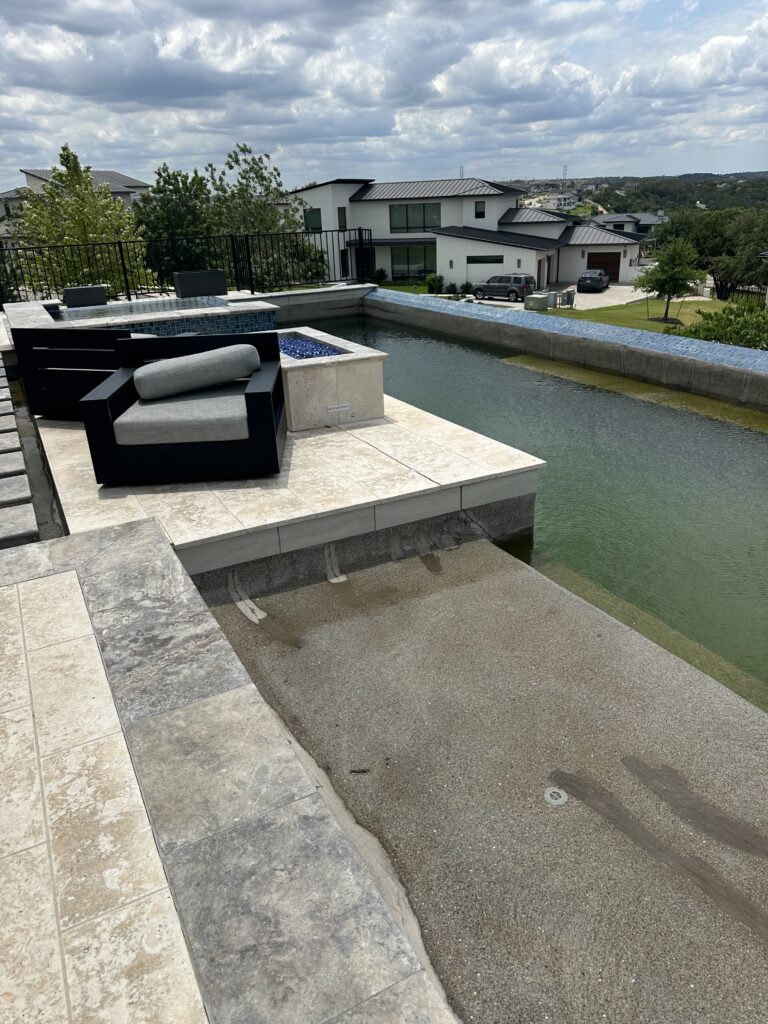
First Signs of ASR in a Swimming Pool
When I walk up to a pool that may be experiencing Alkali-Silica Reaction (ASR), one of the first things I look for is unusual cracking patterns in the concrete shell. These cracks often appear in areas of the pool where the concrete is thinner or exposed to more movement and moisture.
In many cases, the cracking has a distinctive appearance that looks different from normal cosmetic surface cracks.
Common warning signs of ASR in swimming pools include:
• Spider cracking across the pool shell that spreads outward in multiple directions
• Map-pattern cracking that forms irregular shapes across plaster or gunite surfaces
• Cracks around spas, tanning ledges, or beach entries where structural stresses are higher
• Cracking in shallow areas of the pool where expansion pressure can be more visible
• Tile separation along the waterline caused by movement in the pool shell
• Cracks that continue spreading or growing over time
At first glance these cracks can sometimes look cosmetic. However, when ASR is involved they are often being caused by internal expansion inside the concrete itself.
Over time the cracking can spread and begin affecting other parts of the pool structure, including tile lines, plaster finishes, and surrounding deck areas.
What We Sometimes Discover During Pool Demolition
Once demolition begins, we often get a much clearer look at what’s really happening inside the structure of the pool.
On several projects where ASR has been present, opening the pool shell has revealed additional construction issues that occurred during the original build.
In some cases this can include engineering details that weren’t followed, reinforcement that wasn’t placed exactly as specified in the plans, or foundation preparation that wasn’t completed according to the original design.
On the Lakeway pool we are currently rebuilding, the engineering plans actually called for specific foundation preparation beneath the pool shell. However, that work was never completed when the pool was originally built.
Issues like these don’t necessarily cause Alkali-Silica Reaction directly, but they can make structural problems worse once expansion and cracking begin happening inside the concrete.
When multiple factors combine — chemical reactions within the concrete along with construction deficiencies — the structural deterioration of the pool shell can accelerate much faster.
ASR Lawsuits in Central Texas
You may have seen news reports or heard discussions about lawsuits related to ASR in swimming pools across Central Texas.
There are currently a number of legal cases involving homeowners, builders, subcontractors, and material suppliers connected to pools affected by Alkali-Silica Reaction. These cases are still developing, but they highlight how significant the financial impact can be when a pool begins experiencing structural failure.
For homeowners, discovering that a pool may have ASR can be frustrating and confusing. The issue often isn’t visible until cracking begins to appear, and by that point the chemical reaction may already be happening inside the concrete.
Because ASR affects the internal structure of the gunite shell, it can become a complicated situation involving construction practices, material sources, and engineering design.
While the legal side of these cases is still unfolding, they have brought more awareness to the importance of proper concrete mix design, material testing, and engineering oversight in pool construction.
Can an ASR Pool Be Repaired?
This is usually the first question homeowners ask once they learn their pool may be affected by Alkali-Silica Reaction.
Unfortunately, once ASR begins inside the concrete, there isn’t a reliable way to stop the chemical reaction from continuing. Because the reaction occurs within the concrete itself, surface repairs typically don’t address the underlying problem.
In some cases, cosmetic repairs such as patching or resurfacing may temporarily hide the cracking. However, these types of repairs usually do not prevent the internal expansion that is causing the damage in the first place.
Over time, the cracks often continue to spread as the reaction progresses inside the pool shell.
In the projects we’ve been involved with, the only reliable long-term solution has been demolishing and rebuilding the concrete pool shell.
It’s not the news most homeowners want to hear, but structurally it is often the only way to fully resolve the issue and restore the long-term integrity of the pool.
What We Do Differently Today
Because of what the industry has learned from these ASR cases, there is now much greater attention being paid to material testing and engineering oversight during pool construction.
On our projects today, every load of material delivered to our gunite subcontractor is required to be tested by engineers for Alkali-Silica Reaction potential. Those test results must be reviewed and shared before that material is approved for use on one of our job sites.
This additional testing helps verify that the concrete mix being used meets the engineering requirements intended to reduce the risk of ASR developing in the future.
It adds another step to the construction process, but it’s something we believe is essential for protecting the long-term structural integrity of the swimming pools we build.
As more builders and engineers become aware of ASR risks, the industry is placing a much stronger focus on proper mix design, testing procedures, and engineering oversight to help prevent these types of issues from occurring in new pool construction.
You can learn more about the Watercolor Pools process here
What Homeowners Should Do if They Notice Cracking
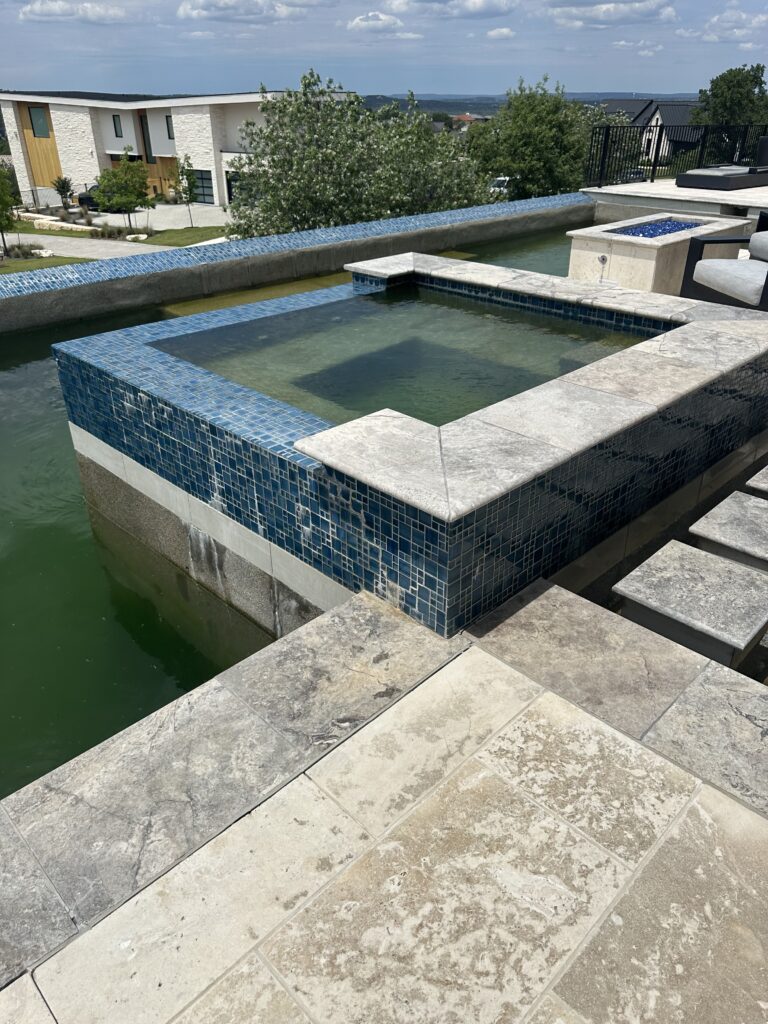
If you own a pool that was built in the past several years and you’re beginning to notice unusual cracking, it may be worth having the structure evaluated by someone familiar with ASR and structural concrete issues.
Spider cracking, map-pattern cracking, or cracking around spas, tanning ledges, and beach entries can sometimes appear cosmetic at first. However, in some situations these types of cracks may indicate something happening inside the concrete shell.
Because ASR is a chemical reaction that develops internally, the damage may progress gradually before becoming more visible on the surface.
Having an experienced pool builder or structural engineer inspect the pool can help determine whether the cracking is cosmetic or related to a deeper structural concern.
Identifying the cause early can help homeowners better understand the condition of their pool and what options may be available moving forward.
Watercolor Pools can inspect your pool for ASR. Click here to contact us
FAQs
What is ASR in swimming pools?
ASR (Alkali-Silica Reaction) is a chemical reaction that occurs inside concrete when certain aggregates react with the cement in the presence of moisture. This reaction can cause internal expansion within the concrete, which eventually leads to cracking and structural deterioration in gunite pool shells.
Why are some Austin pools developing ASR?
From what we are seeing in the field, many of the ASR pools being identified today were built during the surge in pool construction that occurred between 2020 and 2022. During that time there was extremely high demand for backyard pools across Central Texas, and factors such as supply chain disruptions, changes in aggregate sources, and reduced material testing may have contributed to conditions that allowed ASR to develop in some pool shells.
What are the signs of ASR in a pool?
Some of the most common warning signs include:
• Spider cracking across the pool shell
• Map-pattern cracking in shallow areas
• Cracking around spas or tanning ledges
• Tile separation along the waterline
• Cracks that continue spreading over time
These types of cracks can sometimes appear cosmetic at first, but when ASR is involved they are often caused by internal expansion occurring within the concrete.
Can ASR pools be repaired?
Surface repairs may temporarily hide cracking, but they typically do not stop the chemical reaction occurring inside the concrete. Because ASR affects the internal structure of the pool shell, the most reliable long-term solution in many cases is demolishing and rebuilding the affected concrete shell.
About the Author

Bryson Jones is the owner of Watercolor Pools, a custom pool builder based in Central Texas specializing in the design, construction, and structural rebuilding of gunite swimming pools.
Bryson and his team work with homeowners throughout Austin, Lakeway, Bee Cave, Westlake Hills, and surrounding Hill Country communities to build custom pools and address structural pool issues when they arise.
In addition to building new pools, Watercolor Pools has been involved in evaluating and rebuilding several swimming pools affected by Alkali-Silica Reaction (ASR), giving the company firsthand experience with the types of structural damage this issue can cause.
Through careful engineering coordination, material testing, and construction oversight, the team focuses on building pools designed for long-term structural durability in the Central Texas environment.
If you are noticing unusual spider cracking or map-pattern cracking in your swimming pool, it may be worth having the structure evaluated to determine whether the issue is cosmetic or related to a deeper structural concern.
Watercolor Pools builds and rebuilds gunite swimming pools throughout Central Texas and can help homeowners better understand the condition of their pool and what options may be available.
You can contact our team to schedule a consultation or learn more about structural pool rebuilding.
Last Updated: March 2026